
Introduction
In a world where fast and reliable communication is essential, two-way radio technology remains one of the most dependable tools for businesses, safety teams, and outdoor professionals. In Mexico, the demand for strong, clear, and rugged communication devices continues to grow across industries such as private security, construction, logistics, events, hospitality, maritime operations, and aviation support. This is exactly where RadioRed stands out.
RadioRed is a leading online store in Mexico specializing in a wide range of radiocommunication products and accessories. The store offers equipment for diverse needs, from simple short-range team coordination to more advanced setups with repeaters, high-capacity batteries, and specialized audio accessories. Customers also benefit from access to recognized brands like Kenwood, ICOM, and Motorola, known worldwide for durable hardware and consistent performance.
This article explains what makes RadioRed important for Mexican buyers, how to choose the right type of radio, which features matter most, and how modern radiocommunication continues to evolve. Whether you need a practical radio for day-to-day operations or a robust solution designed for challenging environments, understanding the basics will help you make a confident investment.
Why RadioRed Matters for Mexican Buyers
When people buy two-way radios, they are not simply purchasing a gadget. They are investing in operational continuity, worker safety, and instant coordination. A reliable store is critical because compatibility, licensing considerations, accessories, and warranty support can affect performance and long-term costs.
RadioRed focuses on:
- A broad catalog of portable and mobile radios
- Specialized models for marine and aerialcommunication
- Safety-focused options, including intrinsically saferadios
- A complete ecosystem of accessories such as antennas, chargers, clips, microphones, and headsets
- Professional solutions that scale from small teams to multi-site organizations
For Mexican customers, this means access to practical devices tailored to local operational realities, including environments with dust, heat, humidity, and high activity levels.
Understanding Radio Categories: Portable, Mobile, Marine, Aerial, and More
1) Portable Radios (Handheld)
Portable radios are the most common type because they offer mobility and simplicity. They are ideal for:
- Security guards and patrol teams
- Event staff and venue coordination
- Restaurants, hotels, and shopping centers
- Warehouses and delivery coordination
- Outdoor excursions and field teams
Key reasons portable radios remain popular include compact form factors, strong battery options, and easy-to-use channel systems. Many models provide essential features like VOX (voice-activated transmission), scan, and channel programming.
2) Mobile Radios (Vehicle-Mounted)
Mobile radios are designed to operate in vehicles such as trucks, patrol cars, taxis, and service fleets. These radios usually offer:
- Higher output power than handheld units
- Stronger coverage when combined with external antennas
- More robust heat handling for long duty cycles
- Clearer audio for noisy vehicle environments
Mobile radios are a smart option for logistics and transportation operations across Mexican cities and highways, where consistent communication is essential for safety and timing.
3) Marine Radios
Marine radios are designed for environments where water exposure, salt air, and weather changes are constant threats. Marine models often include:
- Water-resistant or waterproof housings
- Dedicated marine channel functionality
- Loud audio for open-air environments
- Reliable transmission in coastal conditions
For Mexican coastal operators, ports, marinas, fishing teams, and recreational boating, marine radios are a core safety tool.
4) Aerial Radios
Aerial communication solutions are designed for aviation-related needs, including airport operations, ground support, and specialized flight communication contexts. These radios prioritize:
- Very clear audio quality
- Stable frequency control
- Reliable performance in open environments
- Compatibility with aviation communication standards
5) Intrinsically Safe Radios
In high-risk environments where flammable gases or combustible dust may exist, standard radios can be unsafe. Intrinsically safe radios are engineered to reduce ignition risks and are often used in:
- Oil and gas operations
- Chemical facilities
- Certain manufacturing areas
- Mining and hazardous storage zones
These radios are a premium investment but essential where safety rules require certified devices.
What Features Matter Most in a Professional Two-Way Radio
Choosing a radio is about matching technology to real-world needs. Below are the features that most influence reliability and user satisfaction.
Frequency Range and Band Planning
Radios are built for specific frequency bands. Common professional solutions operate in VHF or UHF ranges depending on terrain and building conditions. For example:
- VHF often performs well in open spaces and longer outdoor distances
- UHF is often favored in dense urban environments and indoor areas
Understanding where the radio will be used—cities, warehouses, hills, coastlines—helps determine the best option.
Channel Capacity and Organization
Many businesses prefer radios with multiple channels to separate teams, sites, or job functions. A radio with multi-channel support makes it easier to assign groups like:
- Security
- Reception
- Maintenance
- Logistics
- Supervisors
Channel discipline reduces confusion and improves response times.
Rugged Standards and Durability
Professional users should look for durability standards such as MIL-STD testing and an IP rating:
- MIL-STD-810 indicates testing against conditions like shock, vibration, temperature changes, and humidity
- IP54 suggests protection against dust and water splashes, useful for day-to-day fieldwork
Durability matters in Mexico’s varied climates, where devices may face heat, dust, rain, and constant handling.
Battery Life and Power Management
Battery performance directly affects productivity. Look for:
- High-capacity batteries for long shifts
- Quick charging solutions
- Spare battery options
- Battery status indicators
In security and event operations, running out of power mid-shift is not just inconvenient—it can create a serious operational gap.
Audio Clarity and Noise Handling
Clear audio is essential in loud environments such as construction sites, warehouses, and busy streets. Features that help include:
- High output speakers
- Noise reduction technologies
- Compatibility with earpieces and speaker microphones
Good audio means fewer repeated messages and faster decision-making.
VOX, Scan, and DTMF
Modern radios may include productivity features such as:
- VOX for hands-free transmission (useful with headsets)
- Scan to monitor multiple channels
- DTMF signaling for selective calling and control functions
For teams that must coordinate quickly, these features can significantly improve communication flow.
Spotlight: Practical, Lightweight Radios for Daily Professional Use
A common demand in Mexico is for radios that are practical, lightweight, and tough enough to handle constant daily use. Many buyers want a balance: they do not always need extremely complex digital networks, but they do need stable performance, rugged build quality, and dependable accessories.
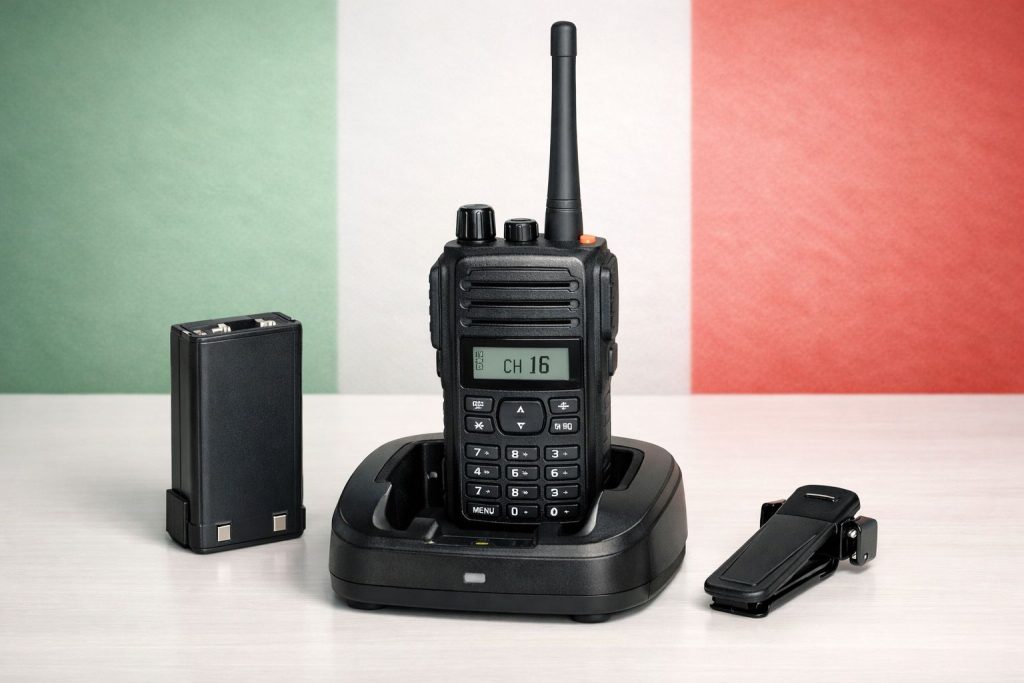
A well-equipped package is especially valuable when it includes essentials such as:
- Antenna for reliable signal performance
- Battery with strong shift coverage
- Charger that supports daily use
- Belt clip for mobility and convenience
For small to mid-size operations—like private security, local events, stores, and hospitality—this type of configuration reduces setup friction and delivers instant usability.
The Value of Trusted Brands: Kenwood, ICOM, and Motorola
A radio’s brand matters because it often reflects:
- Component quality and audio performance
- Reliability under pressure
- Repairability and accessory ecosystems
- Professional support and long-term value
Kenwood is often recognized for strong build quality and practical professional models. ICOM is respected for specialized communication solutions, including marine and aviation-related equipment. Motorola is widely known for large-scale professional deployments and robust performance.
RadioRed brings these brands into one accessible catalog, making it easier for Mexican buyers to compare options based on use case rather than guessing which model fits.
Accessories: The Hidden Key to Better Performance
Many radio users underestimate accessories. In reality, accessories can improve safety, comfort, speed, and audio clarity.
Common high-impact accessories include:
- Speaker microphones for quick push-to-talk access
- Acoustic tube earpieces for discreet security communication
- Over-the-head headsets for loud environments
- Spare antennas optimized for coverage
- Multi-unit chargers for fleet management
- Protective cases for high-wear operations
A radio system is only as strong as its weakest component. The right accessory setup ensures the radio works smoothly during long shifts and demanding tasks.
Repeaters: Expanding Coverage for Large Areas
When operations expand across large facilities, multiple buildings, or wide outdoor areas, direct radio-to-radio range can become limited. A repeater solves this by receiving a signal and retransmitting it to extend coverage.
Repeaters are commonly used for:
- Large warehouses and industrial sites
- Multi-floor buildings or campuses
- Remote outdoor projects
- City-wide service coordination
For companies with growth plans, buying radios that can integrate into repeater systems is a smart long-term decision.
Radiocommunication Technology Trends Buyers Should Know
Radiocommunication continues to evolve, and modern buyers increasingly look for features that improve efficiency, compliance, and scalability.
Key trends include:
- Better battery chemistry and longer duty cycles
- More compact designs with stronger durability
- Improved audio processing for noisy environments
- Smarter signaling features for controlled calling
- Fleet-friendly charging and accessory ecosystems
Even if a buyer starts with a simple setup, choosing a system that can scale later helps protect the investment.
How to Choose the Right Radio Setup from RadioRed
To make the best purchase, define your needs clearly:
- Where will the radio be used?
Indoor buildings, open outdoor areas, coastal zones, or mixed environments? - How many users are on the team?
A small retail team needs a different plan than a 60-person security operation. - How long are the shifts?
Battery capacity and charging options become critical for long shifts. - How noisy is the environment?
If it is noisy, prioritize audio accessories and high-output speakers. - Do you need future expansion?
If yes, consider compatibility with repeaters and more advanced channel management.
When these questions are answered, selecting the right category—portable, mobile, marine, aerial, or intrinsically safe—becomes straightforward.
Why RadioRed Is a Smart Choice for Professional Communication in Mexico
With a wide product selection and a focus on real-world professional use, RadioRed supports the core needs of Mexican buyers: reliability, durability, and complete radio packages that are ready for work. By offering equipment from trusted brands and emphasizing key features like MIL-STD durability, IP protection, VOX, scan, and essential accessories, the store helps customers build communication systems that perform under pressure.
Whether your goal is to coordinate a security team, manage logistics across a city, support a marine operation, or build safer communication in hazardous zones, RadioRed represents a practical starting point for modern radiocommunication solutions.